Ureteral Stenting for Tumor-Associated Obstruction
Case Study

Patient: 9-year-old male neutered German Shepherd Mix
Presenting Condition: Urinary obstruction secondary to urothelial carcinoma of the trigone and prostatic urethra
Background
A patient was referred to Austin Veterinary Emergency & Specialty Center (AVES) for management of urinary obstruction caused by urothelial carcinoma. Initial evaluation included a positive BRAF test and imaging that revealed a prostatic mass extending into the urethra, resulting in obstruction at the left ureterovesical junction.
Collaborative Evaluation
The case involved extensive interdisciplinary collaboration across Oncology, Internal Medicine, Anesthesia, Surgery, and Radiology:
Oncology (Dr. Dolan): Staged the tumor, assessed obstruction risk, and coordinated post-procedural radiation therapy.
Anesthesia (Dr. Whittaker): Provided a dedicated anesthetic plan with continuous intraoperative monitoring.
Nephrourology (Dr. Slead): Performed cystoscopy, identifying significant prostatic urethral thickening and tumor extension into the trigone that obscured both ureterovesical junctions, preventing retrograde stent placement. Urethral stenting was deferred, as the narrowing was partial and expected to improve with radiation therapy.
Minimally Invasive Intervention
The intervention was performed using a combined fluoroscopic and ultrasonographic approach:
Radiology (Dr. Price): Provided ultrasound guidance for IV catheter placement into the left renal pelvis, confirming moderate to severe dilation of the left renal pelvis and ureter.
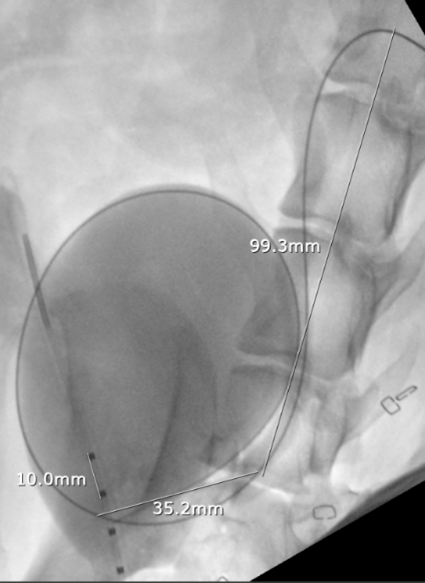
Surgery (Dr. Fleming): Passed a guidewire from the left kidney, through the ureter, into the urinary bladder.
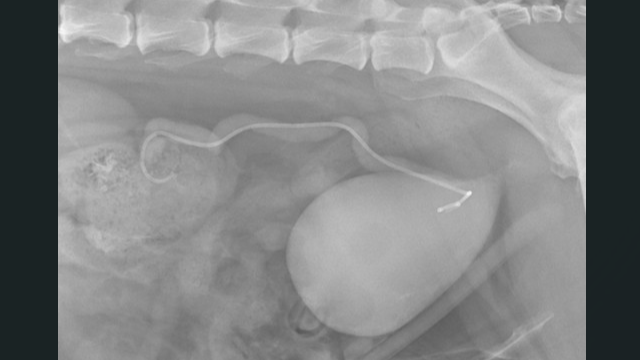
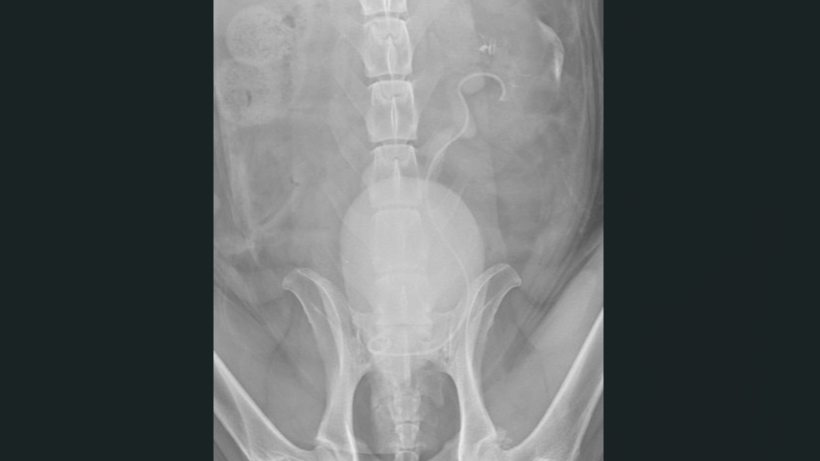
A 3.7 Fr fenestrated ureteral stent was positioned percutaneously from the renal pelvis to the bladder, successfully bypassing the tumor-associated obstruction without surgical incisions.
No intraoperative or postoperative complications occurred. Postoperative imaging confirmed ideal stent placement, and the patient demonstrated appropriate urine output.
Post-Procedure Plan
The patient was transferred the following morning for radiation oncology consultation, aimed at reducing tumor burden in the trigone and prostatic urethra, potentially improving urinary flow. Oncology follow-up will continue with chemotherapy and close monitoring. Should urethral obstruction progress, urethral stent placement remains an option.
Significance
This case highlights the benefits of true interdisciplinary specialty care: coordinated evaluation, real-time decision making, and minimally invasive intervention led to a successful outcome while minimizing procedural risk.
AVES now offers on-site Radiation Oncology, expanding integrated care for patients with urinary tract tumors, nasal tumors, soft tissue sarcomas, oral cancers, and other conditions benefiting from advanced radiation therapy. Referring veterinarians are encouraged to contact the AVES Specialty Referral Team for support with integrated services or case referrals.